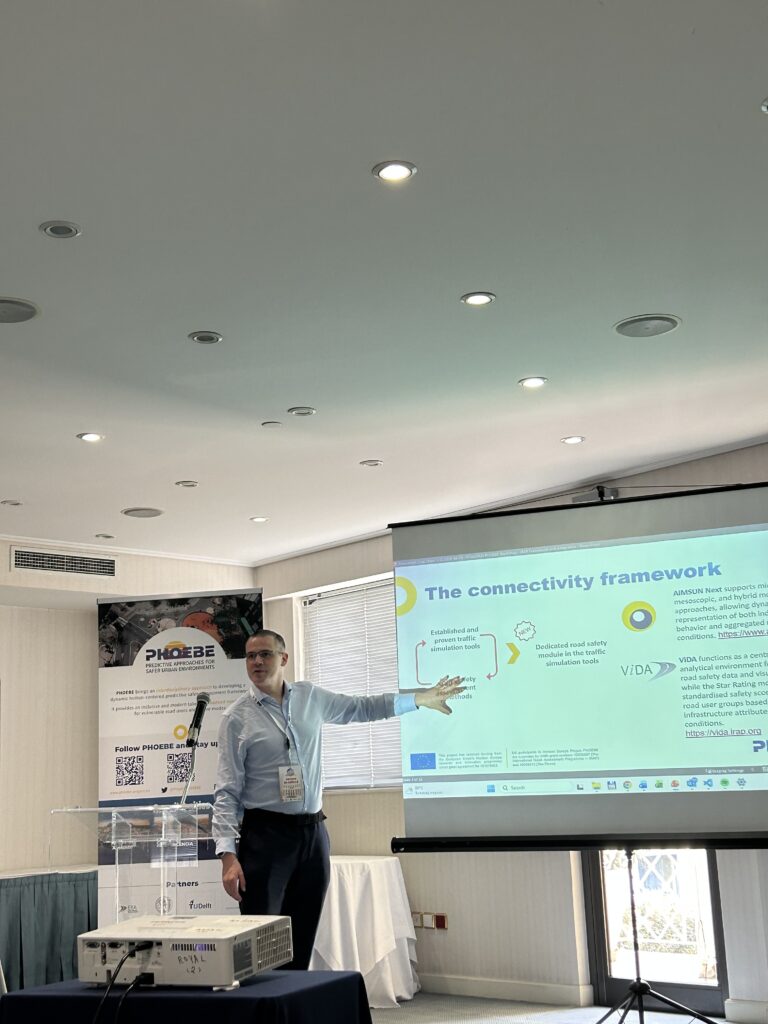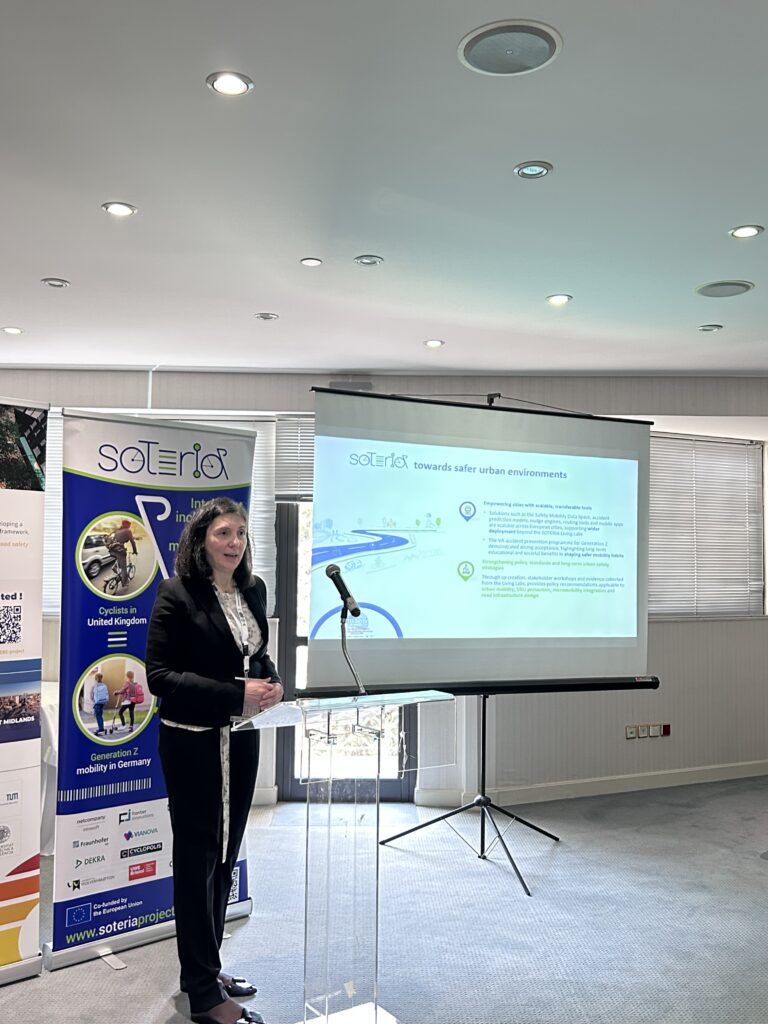
Researchers from the SOTERIA and PHOEBE projects have published a joint reflection on urban road safety, drawing on insights from two dedicated sessions held at the 8th IRTAD Conference in Athens in mid-April. The document outlines shared challenges and complementary approaches from both EU-funded initiatives, which together aim to improve safety outcomes for vulnerable road users including pedestrians, cyclists and micromobility users.
The SOTERIA Project and PHOEBE identified data harmonisation, GDPR-related access restrictions and the integration of new technologies into existing systems as the most pressing barriers to progress. Stakeholder engagement and user acceptance were highlighted as essential conditions for successful implementation.
While SOTERIA takes a user-centred approach through living labs, behavioural nudging and sensor-based data collection, PHOEBE adopts a system-level framework combining traffic microsimulation, demand modelling and socio-economic analysis. Athens served as a key use case, with simulations showing that reduced speed limits and reallocation of road space can deliver meaningful safety benefits.
Impressions from the IRTAD sessions