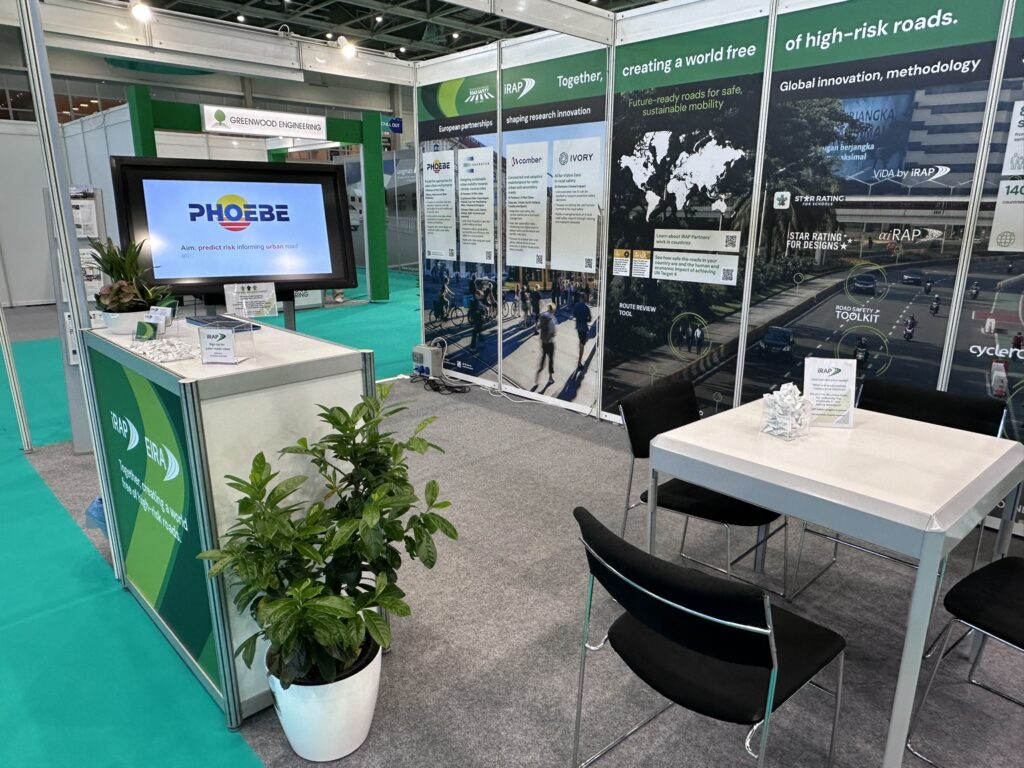
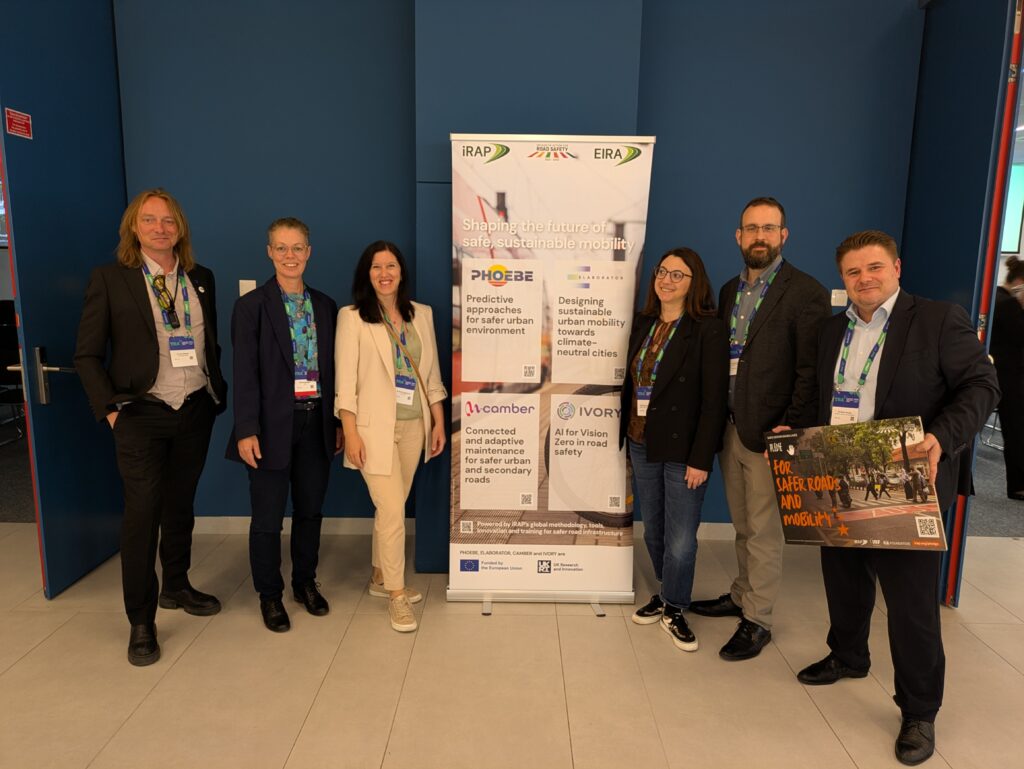
PHOEBE is looking back on eventful days at the Transport Research Arena 2026, which took place from 18–21 May 2026 in Budapest, Hungary. Engagement with stakeholders took place through poster presentations, exhibition stands and a dedicated event of PHOEBE partner iRAP, which hosted its Innovation Workshop on Future-Ready Roads. The latter featured several other PHOEBE project partners, including NTUA, TheFloow, Factual and Aimsun.
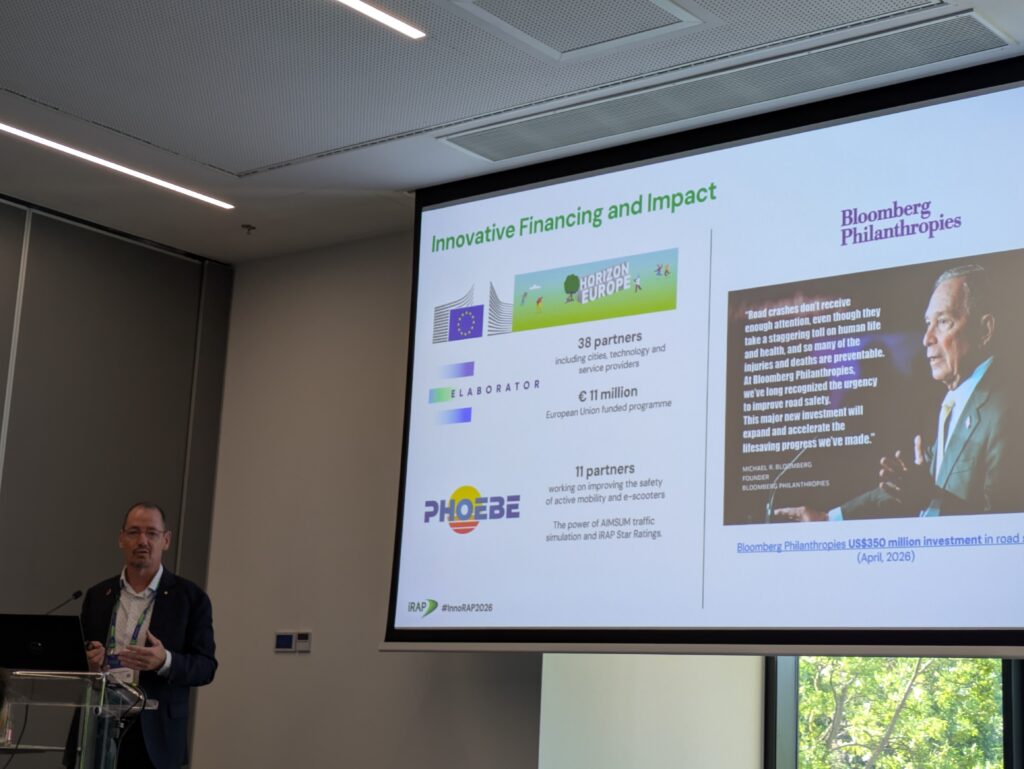
iRAP Innovation Workshop
The full-day event highlighted several presentations that focused on the cooperation between iRAP and AIMSUN, which was fostered through the PHOEBE project. Additionally, iRAP launched its latest Star Rating Model Version 3.10, a methodology that has supported road safety assessments in 140 countries. The new model update is a major leap forward for evidence-based road safety investment, offering stronger protection for vulnerable road users and improved sensitivity to safety gains.
The event was framed by two panel discussions, which gave the floor to a wide range of stakeholders, including representatives from road authorities, cities and connected EU-funded projects such as CAMBER, as well as the International Automobile Federation (FIA). Further information about the speakers, presentations and discussions is available on the dedicated event page.
Oral Presentations
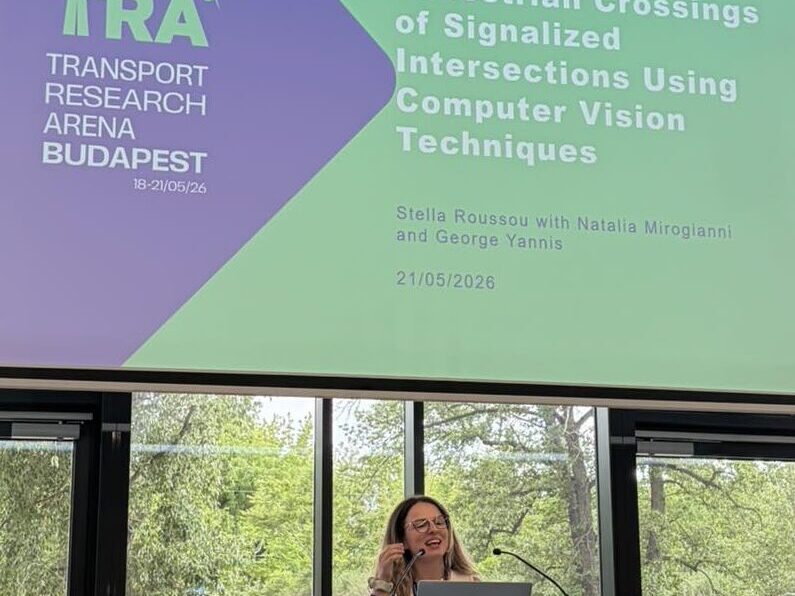
One essential element of each Transport Research Arena is to give European researchers a stage from which to provide a glimpse into their research on all sorts of mobility topics. NTUA presented three papers, which are available to download below and cover the following subjects of pedestrian research, based on Athens-based analysis:
This study examined pedestrian non-compliance at an Athens signalised intersection using manual and automated computer vision methods. The automated system achieved 64.60% overall accuracy, with performance hindered by signal occlusions. Non-compliant pedestrians crossed faster and selected sufficient vehicle gaps intentionally.
Using smartphone video and computer vision, this study compared illegal pedestrian crossing severity in Athens and Rethymno. Athens showed significantly more critical pedestrian-vehicle interactions and the tourist environment of the Crete town of Rethymno produced larger safety margins overall.
“Investigation of Illegal Pedestrian Crossings at Crosswalks in the Centre of Athens, Greece”
A stated preference survey of 212 respondents examined illegal crossing decisions in central Athens. Surveillance cameras proved the strongest deterrent, while the main reasons for illegal crossings were waiting time, social influence, route familiarity, and perceived crash risk.