PHOEBE consortium sets course for final project phase 

Last week, the PHOEBE consortium convened at Lake Bled for two days of productive discussions, building on an insightful exchange with members of our Community of Practice. The meeting, hosted by EIRA, offered an opportunity to review the project’s progress and shape the work ahead as it enters its final phase. 

Naturally, the agenda centred on the remaining work packages that will be crucial until the project concludes next summer, including systems integration and transferability, communication and exploitation, and overall project management. 

A central focus of the meeting was the decision support tool. Consortium members examined the challenges surrounding its development, with particular attention given to the integration of pilot results. Additional issues about data collection and certain protocols were also brought forward. Despite these hurdles, PHOEBE remains firmly on track as it enters the last stretch of the project. 

Communication, dissemination and exploitation activities were another key point of discussion, highlighting opportunities for cooperation with the EU Road Safety Cluster, the organisation of webinars and an initial exchange on the scope of the PHOEBE final conference, which is expected to take place next summer. 

The meeting concluded with an open discussion on the key exploitable results expected by the end of the project and beyond. These efforts aim to ensure the long-term relevance and practical applicability of the PHOEBE framework and the decision support tool currently under development. Partners now look ahead to the next meeting in Birmingham in Spring 2026, which will be centred around the West Midlands pilot 

‘Community of Practice’ offered valued guidance to PHOEBE consortium 

The Community of Practice convened on 3 December, marking the opening day of the consortium meeting at the picturesque Lake Bled in Slovenia. Participants included representatives from our sister project SOTERIA, stakeholders from the West Midlands Pilot location and local partners from Zagreb and Ljubljana.  

The session began with an overview of the project and an outline of PHOEBE’s expectations for the community of practice, particularly valuable as several new and local stakeholders were attending for the first time. 

POLIS underlined the importance of critical feedback to ensure that PHOEBE’s solutions and framework can ultimately be applied by public authorities. The workshop then moved into an in-depth explanation of the PHOEBE framework, detailing the models it comprises and the links between them. This was complemented by a presentation of the project’s core principles, including demand modelling, risk assessment, and behaviour modelling. 

To support participants’ understanding, examples drawn from the pilot activities were presented, such as the Athens Great Walk, alongside practical conclusions that will inform future work. These included insights on data availability and compatibility, the need for multi-criteria evaluation across safety, mobility and environmental indicators and the potential for PHOEBE use cases to serve as reference configurations for cities with similar profiles.  

The second half of the community of practice was devoted to discussing the first PHOEBE results, with participant responses now undergoing analysis. The intensive day of exchange concluded with a networking event, offering an opportunity for attendees to get to know one another in an informal setting. 

The Floow achieves AiRAP accreditation through collaboration with iRAP

We are pleased to share that PHOEBE partner The Floow has been officially accredited as an AiRAP Attribute Supplier by the International Road Assessment Programme (iRAP). Accreditation marks an important milestone for both The Floow and the PHOEBE project, recognising the robustness and global applicability of telematics data in road safety research and risk mapping. Achieving accreditation is a necessary prerequisite for satisfying one of the six main objectives of the project; to exploit big data and telematics through AI and machine learning.   

The accreditation process

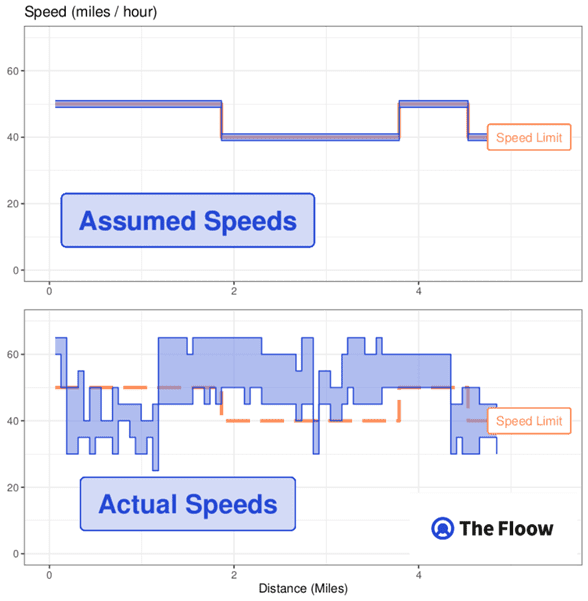
AiRAP accreditation is iRAP’s newest accreditation category and is open to any data providers and is managed as part of iRAP’s broader accreditation program. It is specifically to certify the use of data derived from big data and/or machine-learning methods meets iRAP specifications. The accreditation process required The Floow to become familiar with IRAP methodologies and for its speed and traffic flow data to pass an evaluation. Measurements from telematics data can cover all roads in an area, an advantage over traditional approaches conducted at fixed points.

The PHOEBE project provided an opportunity for The Floow to perform internal investigations that compared the data with established sources. The results of these investigations were provided to iRAP to establish the extent to which their data quality, accuracy, and consistency standards were met. The evaluation concluded that The Floow had provided “strong evidence that calibrated telematics data can reliably estimate values from established sources with high accuracy.

The successful accreditation confirms that telematics data can now be used in AiRAP surveys, providing a better understanding of speed and flows along entire routes and through intersections. This capability opens the door to large-scale road-safety risk assessments at lower costs. Dr Sam Chapman, Director of The Floow, commented:

“Our collaboration with iRAP, through the PHOEBE project, has been instrumental in advancing how telematics data can be used as a powerful tool towards improving the quality of road safety assessments globally. We are proud that our work has led to AiRAP accreditation, confirming that telematics driver behaviour data can play a vital role in targeting interventions and saving lives worldwide.”

For more information about The Floow, get in contact via info@thefloow.com.